Education economist · PhD
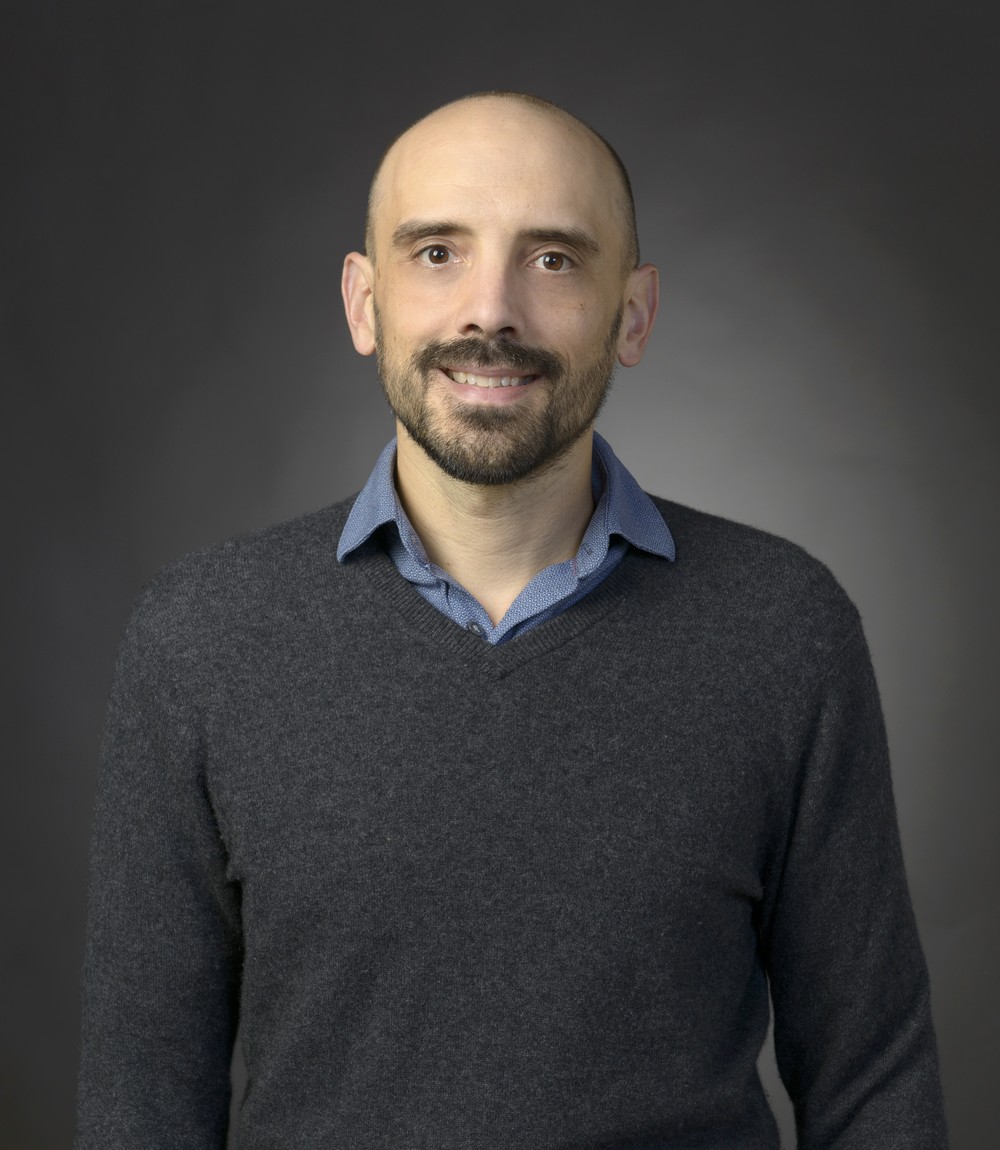
Alexis Le Nestour
I help governments, international organisations and funders measure what children learn, and use that evidence to improve education systems, mainly in Francophone Africa.
- Based in
- Marseille, France
- Working languages
- French and English
- Regions
- West and Central Africa, Madagascar
- Current work
- UNICEF Innocenti, Data Must Speak
MOHEBS evaluation, Senegal
About
I am an independent education economist. For more than fifteen years I have worked with ministries of education, international organisations and funders to understand what children learn at school and what helps them learn more, mainly in Francophone sub-Saharan Africa.
My work covers the full chain of evidence: designing and analysing learning assessments, building the psychometric scales that make results comparable, modelling what drives school performance, evaluating programmes, and simulating the cost and effect of policy options. I started in 2007 as a technical advisor to PASEC in Dakar, then worked for Save the Children UK, the Center for Global Development and UNICEF Innocenti, where I have contributed to the Data Must Speak research in eight countries since 2021.
I hold a PhD in economics (microeconometrics) from the University of Otago and a master's degree in development economics from CERDI. I work in French and English, remotely from Marseille and on site with national teams.
I also work to make research accessible: I write blogs and reports for decision-makers and non-specialist readers, and present results to ministries, funders and wider audiences, in French and in English.
What I do
Learning assessments
Design, analysis and strategic review of large-scale assessments: PASEC, EGRA/EGMA and national assessments.
Psychometrics
Item response theory (IRT), item and test analysis, and the treatment of missing data, so that assessment scores are reliable and comparable.
Econometrics and impact evaluation
Econometric modelling of school performance, randomised controlled trials and quasi-experimental designs, cost-effectiveness analysis.
Education data and surveys
Analysis of administrative (EMIS) data, household and phone surveys, and identification of schools that outperform others in similar conditions.
Policy simulation
Microsimulation, results projections and value-for-money analysis to compare policy options before they are funded.
Working with ministries
Co-creation of research with ministries of education, training of national teams in data analysis, and presentation of results to decision-makers.
Research communication
Blogs, reports and presentations that make results clear to decision-makers and non-specialists, along with workshops and interactive dashboards, in French and English.
Experience
Quantitative lead, evaluation of the MOHEBS programme
CRDES and Ministry of National Education, Senegal · Funded by the Gates Foundation
Impact evaluation of in-service teacher training and structured pedagogy for teaching mathematics in national languages (Wolof, Pulaar, Seereer) and French: longitudinal cohort with a matched comparison group, classroom observations and cost-effectiveness analysis.
Education researcher
UNICEF Innocenti · Data Must Speak research
Full research cycle in eight countries, from the analysis of EMIS and learning assessment data to field validation. Developed the quantitative method used to identify positive deviant schools; lead on quantitative methodology in Madagascar and Chad for the SCALE phase.
Senior Research Associate
Center for Global Development · London
Research on the long-run decline of school quality in developing countries, using four decades of learning data. Designed and ran a Covid-19 phone survey of households in Senegal with CRDES. Co-author of Schooling for All.
Senior Research Advisor
Save the Children UK · London
Led the quantitative analysis of flagship advocacy reports (Still Left Behind, Every Last Child, Unequal Portions). Designed a randomised controlled trial for the Girls' Education Challenge in Mozambique and built the organisation's value-for-money framework.
Technical Advisor
PASEC–CONFEMEN · Dakar, Senegal
Supported primary education quality surveys in Burundi, Lebanon and Guinea-Bissau, from sampling to reporting. Trained ministry staff in the analysis of assessment data and developed IRT and missing-data procedures.
Selected consultancies
Strategic review of PASEC · PASEC / Gates Foundation
Costs, economic value and future directions of PASEC, with a cost comparison against PISA, TIMSS, SACMEQ and ERCE.
Replenishment methodology · Global Partnership for Education
Projection of results for 2025–2030, with expected returns expressed in learning-adjusted years of schooling.
AFLEARN · DataFirst, University of Cape Town
Study of sustainable assessment practices in African education systems, with interviews of assessment officials in Benin and Burkina Faso.
Child poverty microsimulation · UNICEF Georgia
Simulation of social policy scenarios to reduce child poverty, with poverty profiles and recommendations.
Countries
Senegal, Togo, Côte d'Ivoire, Niger, Mali, Burkina Faso, Chad, Benin, Guinea-Bissau, Burundi, Madagascar, Mozambique, Zambia, Georgia, Lebanon, Viet Nam.
Publications
Reports
- Learning from Schools: Locally rooted practices to improve education outcomes at scale UNICEF Innocenti, 2025
- Unpacking Factors Influencing School Performance (country report series) Data Must Speak, UNICEF Innocenti · Nepal and Togo (2022), Côte d'Ivoire, Madagascar, Mali and Niger (2023), Burkina Faso and Chad (2024)
- Schools that inspire change (country report series) Data Must Speak, UNICEF Innocenti · Mali and Togo (2023), Madagascar (2024), Chad (2025)
- Methodology for projected results from the GPE replenishment Global Partnership for Education, 2025
- Schooling for All: Feasible Strategies to Achieve Universal Education Center for Global Development, 2022 · Co-author
- Évaluation PASEC Sénégal CONFEMEN, 2009
Working papers
- The Long-Run Decline of Education Quality in the Developing World A. Le Nestour, L. Moscoviz and J. Sandefur · Center for Global Development Working Paper, 2022
- Covid-19 phone survey in Senegal Center for Global Development, with CRDES, 2020
- Inequalities in early learning: What can we learn from DHS and MICS surveys Save the Children UK, 2018
Peer-reviewed articles
- How effective and fair is user fee removal? Evidence from Zambia using a pooled synthetic control A. Lépine, M. Lagarde and A. Le Nestour · Health Economics, 27(3), 2018
- Estimating unbiased economies of scale of HIV prevention projects: A case study of Avahan A. Lépine, A. Vassall, S. Chandrashekar, E. Blanc and A. Le Nestour · Social Science & Medicine, 131, 2015
- The Determinants of Health Care Utilisation in Rural Senegal A. Lépine and A. Le Nestour · Journal of African Economies, 22(1), 2013
Blogs
- Nine Cents Well Spent: Maximizing PASEC's Value for African Education With Barbara Bruns · Center for Global Development, March 2026
- Strengthening National Evaluation Systems in Francophone Africa: Lessons from Benin, Burkina Faso, and Togo ADEA, November 2025
- How to unleash the power of data to transform education policies With Renaud Comba · Global Partnership for Education, June 2023
- How Much Should Governments Spend on Teachers? With Lee Crawfurd and co-authors · Center for Global Development, May 2022
- What Happened to Senegalese Students after the COVID-19 School Closure? With Samba Mbaye, Laura Moscoviz and Justin Chery · Center for Global Development, July 2021
- New PASEC Results Show Modest Improvements in Student Learning in Francophone Africa, but Inequalities Are Widening Center for Global Development, January 2021
- Five Findings from a New Phone Survey in Senegal With Laura Moscoviz · Center for Global Development, April 2020
Education and tools
PhD in Economics (microeconometrics)
University of Otago, New Zealand, 2018. Thesis: Demand for Schooling in Rural Senegal.
Master's in Development Economics
CERDI, Clermont-Ferrand, France, 2007.
Languages
French (native), English (fluent).
Software
Stata, R, SurveyCTO, KoboToolbox, Tableau, LaTeX.
Contact
For a project, a collaboration or a question about my work, write to me with this form or on LinkedIn.